
Uniwersytet Mikolaja Kopernika w Toruniu (NCU), PL 

About
The Nicolaus Copernicus University in Toruń, founded in
1945, is the biggest university in northern Poland, comprising 14
different faculties covering disciplines from science to
humanities. The rich education, offered to about 40,000 students,
includes 50 fields of studies, 100 specialisations, over 130
graduate and post-graduate courses and 16 doctoral schools.
CHARISMA will be managed by the Institute of Physics in close
collaboration with the Institute for the Study, Restoration and
Conservation of Cultural Heritage of the same university. The
Institute of Physics consists of 8 research departments and offers
degree programs in fields of physics (theoretical, experimental,
medical and optoelectronics), technical physics (incl. informatics)
and robotics. The Institute also hosts the State Laboratory of
Atomic, Molecular and Optical Physics (FAMO). Both institutions are
members of the National Laboratory for Quantum Technologies
co-funded by the European Union.
The project will be developed in the Group of Medical Physics,
involved in developing Spectral domain Optical Coherence Tomography
(OCT) since 1998. At present, the group is developing new OCT
techniques for both medical and cultural heritage applications.
Relevant experience and role
A major task of Nicolaus Copernicus University in CHARISMA project
will be to set-up a mobile, high resolution Spectral domain Optical
Coherence Tomography instrument dedicated to art examination.
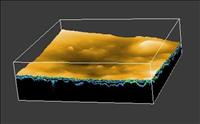
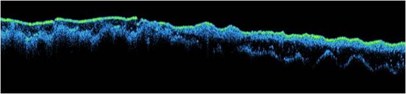
OCT is a non-invasive and non-contact method of optical sectioning
of partially transparent objects with a micrometer axial
resolution. The method utilizes near infrared light of low
intensity of a few miliwatts to obtain cross-sectional images of
various objects. The images collected side-by-side are used to
extract the volume information about internal structure of objects.
The technique is under development since 1994, mostly for medicine
diagnostics, especially in ophthalmology. Over this time it was
implemented as a routine examination method and many instruments
are now commercially available. Since the OCT have reached
certain level of technological advancement, its application to
material sciences was straightforward.
The applicability of OCT to examination of
objects of art is in focus since 2003. Until now, OCT has been
employed in the investigation and conservation of artworks to:
examine varnish and glaze layers of easel paintings, analyze
underdrawings, examine historic jades, ceramics and glass objects,
inspect atmospheric corrosion of stained glass, and precisely image
punchwork.
Another group of applications is related to monitoring various
dynamic processes such as the drying of a varnish layer, laser
ablation of varnish, and for the tracing of environmentally-induced
deformations of paintings on canvas.
 Lately OCT
was also used as a supporting tool for Laser Induced Breakdown
Spectroscopy. Complete list of papers devoted to all these
modalities are available from the dedicated website http://www.oct4art.eu.
Lately OCT
was also used as a supporting tool for Laser Induced Breakdown
Spectroscopy. Complete list of papers devoted to all these
modalities are available from the dedicated website http://www.oct4art.eu.
Until now for the aim of examination of objects of art
multi-purpose, medium resolution instruments were mostly used. If
the high resolution tomographs (axial resolution in air better then
3 μm) are considered, they are laboratory mounted, usually on
optical tables.
The novel instrument will be compact, easily transferable to
the site of the object being investigated, and optimised for the
highest available resolution. The device will scan the object in 2D
providing data in 3D imaging. A dedicated data acquisition and
processing software will be also developed. Emphasis will be on
easiness of transfer of the device including its re-installation
on-site and its mechanical stability. The prototype will be
equipped with sensor of temperature and humidity, as well as with a
small build-in camera to document examination conditions and exact
location of scanning. In parallel to hardware, a software package
will be developed. After completion, the performance and properties
of the instrument will be demonstrated in collaboration with
partners and users towards the following applications: imaging and
thickness measurements of varnish and glaze layers, examination of
range and level of water corrosion in glasses, monitoring of
restoration processes such as varnish removal and laser
cleaning.
The development of the OCT instrument will
be followed by a two-days training event (Training on
application of Optical Coherence Tomography (OCT) to structural
analysis), dedicated to present traditional and innovative
applications to potential users.
Website address:
www.umk.pl/enwww.fizyka.umk.pl/fizyka_en
www.fizyka.umk.pl/~fizmed
www.fizyka.umk.pl/~ptarg
Team Leader
Name: Prof Piotr Targowski, PhDAddress: Institute of Physics, Nicolaus Copernicus University, Grudziadzka 5, 87-100 Torun, PL
E-mail: [email protected]

